Monday, March 31, 2014

Great Games For Learning!

Games are a great way to teach and reinforce concepts. Plus, it's so much fun, your child won't even know they are learning! Here are a few that have worked for us!

Reading, Spelling, Phonics, and Vocabulary Games

BINGO with words
Print a page with your child's spelling or reading words and play BINGO!  Here's a link to a free 100 most commonly used words printable that you can use for BINGO!
Take 2 
This is a game our whole family really enjoys! Here's how you play: Use scrabble tiles from your scrabble board game or you can even buy just the scrabble tiles! Place the tiles in the middle of the table. Each player starts with 9 tiles. When you can arrange your tiles so that each tile is used for a word and connected like in scrabble, you call out "take two". Everyone then has to take two more tiles from the middle and continue trying to make and connect words! It is a super fun game and your kids won't even know their learning!


Boggle Junior Game I have been very surprised at what a big hit this game is with my kids! They don't even know they are learning to spell!


Tile Lock Scrabble Age old proven word game! Spell words to get points!


Big Boggle The original Boggle game is what I learned on and loved! My kids like this version as well!
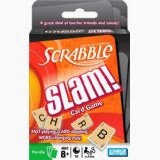


Scrabble Slam Cards This is a fun card game where each player tries to spell words from the cards in their hands!


Educational Insights Blurt! This game has very good reviews and I've only heard good things about it. You play while you learn vocabulary!


Learning Resources Snap It Up! Phonics:Word Families I'm super excited about this game! Ordering it today!

Math Games

Dominoes
There are so many variations of dominoes. Our favorite is the standard dominoes game where you have to add up to a multiple of five to earn points, and 42! Easy, fun, and inexpensive math game!


Math War Multiplication Game Cards My boys love to play War! Now, they can play while learning their multiplication facts! Yay!


Monopoly Board Game Learning money is super fun with this tried and true game of Monopoly!


Learning Resources Sum Swamp Game Want to learn addition while playing? Addition is a great skill to learn as multiplication builds on the principles of addition! This game has great reviews!


Pay Day Board Game (Editions may vary) My husband grew up playing this game and now my kids love it! Teach kids how to count, earn and spend money!


ThinkFun Math Dice Jr. My mother-in-law gave us this game for Christmas one year and the kids really had fun playing it! It really teaches mathematic principles!

Overall Educational Games


Brain Quest Smart Game I am really excited about this game! It involves math, science, and reading, among other things! We love the Brain Quest cards and this looks super fun!


Brain Quest Grade 1 Brain Quest cards are perfect for road trips! We like to bring our cards and ask questions in the car! They have different sets for different ages so you can continue the tradition as your children grow!


Cranium Family Edition My kids love cranium. It's fun for the whole family and you learn a little about everything!

Thursday, March 27, 2014

Auditory Learning Ideas

An auditory learner is someone who learns most effectively with the help of sound. This could be through their own voice or the voice of others. Most of us learn through a variety of methods. All methods benefit people to a different degree. 

If you have an auditory learner, or want to try auditory learning out, here are a few things that we have done that seem to work for us:

PVC Pipe Phones: Glue two elbow pieces of pvc pipe on both ends of a small pvc pipe that you cut to about 2 1/4 inches long. (You may want to measure to make sure this is the right size for your child). You want the pvc pipe phone to be in the shape of a phone. Hold one end to their ear and one end to their mouth.  Practice spelling words, reading, or studying.

Learning CDs: We are big fans of learning through music. Two cds that we love are: Jinglespells for spelling and Multiplication Mountain for math. Hap Palmer who does Multiplication Mountain has albums on lots of other subjects. Read more on how we use Multiplication Mountain in a multi-sensory way to learn math facts!
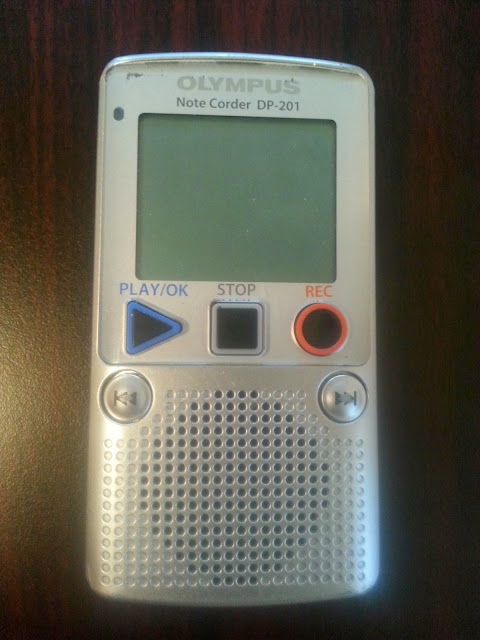
Voice Recorder: Every so often we break out the voice recorder and practice spelling words!  It beats calling them out every day and when you're busy and it's an effective way to practice as the child is participating in auditory learning. The recorder has become a popular item in our house! You can use a recorder to study other subjects,  record a book for a sibling, or study for a test! We bought this Digital Voice Recorder for under $30.

Reading out loud to your child: This is a great way to reinforce concepts. Plus, it's just fun! Here's a list of books that are great for learning concepts!

Videos: Videos are another way that auditory learners can learn! YouTube is an amazing place to find videos on a variety of subjects. Check out this site that lists a number of children's books that have been posted to YouTube!

A Phonics and Reading Curriculum that Works For Us

I have owned a few different reading and phonics curriculum books, but the book that has really worked for us is called Phonics Pathways: Clear Steps to Easy Reading and Perfect Spelling. Here's why:

It begins very simple with the short vowels and gradually adds the consonants to make very simple short vowel words and continues all the way up to complex words in sentences. The progression feels so natural. We move slowly and repeat as often as needed.

It encourages both copy work and dictation and has games to play to reinforce what is being taught.

It includes spelling rules. These rules have been wonderful as my son needs very explicit phonics instruction. We memorize the rules and review them daily.

It is made for all ages and skill levels, so, I can use it with my four year old who is learning to read as well as my 9 year old who needs a little more instruction. They also have a book called Reading Pathways that focuses on reading fluency. 

The lessons are very short. It encourages only 5 - 15 minutes per day. This is doable for me, a busy mom of 4! Each page even has quotable words of encouragement given by a truly wise bookworm named Dewey.

7 Ways To Get Your Reluctant Reader To Read

Do you have a reluctant reader? Check out this list of 7 ways to get your reluctant reader to read on ADDventures in Learning!

Wednesday, March 26, 2014

Spelling With Letter Tiles

There are a few programs that set up their phonics learning around letter tiles.  Physically manipulating letters to form a word is a good way to get a child engaged in the spelling process. I decided to give it a try with our own letter tiles.  As I called out the words, G spelled then using the tiles.  Here's a printable copy of the letter tiles we created for the spelling tile activity so you can try it out yourself!  Just print,  cut,  and laminate. You can also do this same activity with Scrabble tiles!

Tuesday, March 25, 2014

Free Downloadable Children's Books!

There is something about reading a book on a tablet or computer that gets my kids extra excited to read. So, I was super excited to find this site: Free Kids Books Blog! It has free downloadable children's books. It also has a listing of books on youtube and information on reading and literacy. Great site! We are excited to use it!

Learning with Living Books

When learning about mathematics, why not read  engaging books which teach mathematic principles!
The same principle is true for all subjects, science, history, etc. In summers, this is one of the principles of schooling that we adhere to.

The idea that children can be taught important academic concepts is a principle established by the Charlotte Mason approach to teaching children. These books are referred to sometimes as "living books".   What are the basic principles of this approach to learning? Here's a blog with a list of 7 characteristics of a Charlotte Mason education if you want to know more!

Also, visit my page of Tried and True Children's Learning Books to find books on all subjects!

After School Schedules

Children do better with schedules, and mine are no exception. Our daily after school schedule  also helps me not be the nagging mom that my brain is nagging me to be!

Schedules are also better written out for many reasons. I recently read a study about how effective checklists are. So, why not have a written out schedule in check list form?

Why not slap it on a clipboard and call it good! For some of mine who need extra reminders, I require that they carry the clipboard around with them. I think it kind of makes them feel important. Here's a free sample of our after school schedule for those of you wanting to try it out in your home!


Monday, March 24, 2014

100 Words Club

In order to encourage the memorization of the spelling of the 100 most commonly used words in the English language,we've started a 100 Words Club! My kids can go up a level in the club each time they pass off a set of words and earn some computer time, which they really love!

Here's how it works:

I printed off my 100 words cards.

Then, I went through my Phonics Pathways curriculum to find when the words would be introduced. There were some that have already been introduced, so, we started with those.

Each day, we concentrate on about 5 words. If he knows them, we move on.

You can also do this with reading! Time them to see if they can read a set number of words in a time limit in order to make it into the club!

Learning To Read and Spell The 100 Most Common Words


The first 25 most common words in the English Language make up about 1/3 of all of the printed material that we read. The first 100 most common words make up about half of all the printed material. For some children, they just need a little more specific exposure and explicit instruction than others.

We are starting our study of these words using a similar method used in Phonics Pathways. In addition, here are some ideas for ways to expose your child to these words and practice them using a multi sensory approach.

For exposure, you can:

  • Make stories together using a handful of these words.
  • Create a 100 Words Club.
  • Play BINGO with them.
  • Find them in a book, magazine, or newspaper.
  • Cut them out and hide them around your house for your child to find in a game of Hide and Seek.
  • Trace them in sand or salt or flour.
  • Make the letters with play dough.
  • Dig for them.
  • Write them with good smelling markers.
  • Use a Fly Swatter to Swat as they spell.


Here is a link to a Free Printable set of 100 Most Common Words Flashcards. You can use these to play Bingo, for any game or activity, or for a multi sensory flash card experience!


Sunday, March 23, 2014

A Young Boy's Problem - My Take on Boys Adrift

I have 3 young boys. They are very normal happy, fun loving, rough and tumble boys. None of them possess any problem of grand proportions.  At least not any that they are aware of at their tender ages of 9, 7, and 4. What they may not be completely aware of is that the world that they will grow up in is quite different from the worlds of both of their middle age parents. This, among other things, makes us quite unexperienced in the consuming world of parenting. Believe me, I'm not blaming myself. It's just the way the cookie crumbles, as my oldest would say. Here's another thing stacked against their probably of having an experienced "mom", I'm a female. I have very little ability to understand some things about the male species. So, my three little sword wielding, bug catching, energy expending boys are stuck with me most of the time. This is not the only, nor the largest possible brick stacked against them.

It is extremely common now for many 20-30 year old male human beings to find themselves out of the house, unprepared, unmotivated, unneeded, and grossly misunderstood. Many of them find their way back into the house and onto mom and dad's couch. Their daily wins on the computer or game console being their greatest victories. What happened and how can I help mine not end up 32, unemployed, and living on my couch. According to Leonard Sax, a doctor and psychologist, who has written a book entitled Boys Adrift, a clue to understanding what is happening is by looking at what boys are built to be.

According to Sax, boys are wired to do all of the things that man through history was required to do to stay alive. It is built into their DNA. It is what kept us alive as a species these thousands of years. So, what exactly are those "things". Well, they aren't things that I relate to much, unfortunately. Boys, like men, have a very real psychological need, among other things to be a respected and integral part of a tribe, to survive through hunting and engaging in "warrior" type behaviors. Our society as a whole, does not appear to need or respect many of the things that boys and men are set up psychologically to do. Furthermore, there are many "quick fixes". These quick fixes include things like video games or pornography. Why pursue successes in life the hard way when you can achieve them at home on your computer or game console?

Another very big take home from the book for me was that most public schools in the United States are not set up to teach the typical boy the way he is designed to learn. This is a bit alarming for me as I see this in my own boys. Some of the things he suggests are finding schools or a different method of schooling that is more competitive in nature or finding something to balance the missed successes with something that might give the boys healthy "wins".

Sax lists 5 factors in his book that are leading to this boy epidemic: Changes at school, Video Games, Medications For ADHD, Endocrine Disruptors, and the Revenge of the Forsaken Gods.  Whether these problems will result in a major disruption in society, I don't know. I do know that for me and my three warriors, we are continuing the hunt for ways to teach them that regardless of the difficulty involved in not going "adrift", a respected, well-rounded, successful male is what they can and should keep trying to be. I don't think this is beyond reach.

Dr. Sax has a website that might be interesting to check out, here's the link. Or, here's a link to an interview he did on NPR.

Handwriting Help!

Yay! The paper arrived! I've never been more excited to open a package of paper. It looks like notebook paper, feels like notebook paper, but, it has the extra handwriting lines so they can check their letters!  I'm sure you can find something similar at any office store. I found this School Smart Cursive Ruled Notebook Paper  at Amazon as well as here at Walmart.com. Do you have a child who struggles with handwriting? Check it out for yourself!

Saturday, March 22, 2014

Word Mapping and How It's Helpful

I remember from some of my linguistic classes in college the idea of mapping with words and sentences, so, this idea is not new to me. However, the idea that word mapping is a great way to teach struggling spellers, writers, or readers didn't occur to me until I found the idea researching one day online. 

This concept makes sense to me in many different ways. For children who have a difficult time just soaking in this information through reading or daily exposure to words, a logical, explicit, repetitive study of words can help. We have found some success learning spelling words and new words when reading by using this method!

Word Mapping is basically discovering the parts of the word then discussing why the word looks like it does by discussing the rules behind each part. In English, because of the many strange spellings, we might think that our language does not follow rules all the time, or that the rules are the exceptions. If we study the English language, we will find that there are rules for the spelling of each word and they are followed!

The curriculum for phonics that we are following basically teaches children to create words using the rules learned. When studying spelling words, however, we are breaking down the words into their parts and mapping them out.

For example, let's take the word "sunny". 

  1. First, we would discover the consonant - vowel pattern it follows. Sunny's consonant - vowel pattern is: cvccv. We write this down so we can check our word at the end. 
  2. Then, we count the phonemes and draw blanks for the number of phonemes we hear. 
  3. Now, it's time to fill in the phonemes. 
    1. We would first notice that it begins with the /s/ sound, which, in english, we spell with either a "c" or an "s".  In this case, it is an "s". (This is because the soft c is never used when the second letter is a "u". - See #2)
    2. Then, we would go over our short vowel chart to distinguish the vowel sound in the middle of the word.  In this case, it is a short /u/ sound. 
    3. Next, we discover that when we say /sunny/, there is a /ee/ sound at the end of the word, and we know that in English, if the word ends in the sound /ee/, it is usually spelled with a "y". This "y" is considered a suffix. 
  4. Lastly, we would discover by looking at the word that sunny has two "n"s in the middle. It follows the "doubling" rule, which is, when you add a suffix to a one syllable word which ends in a consonant, you double the consonant before adding the suffix "y". So, the /n/ sound that we hear is spelled with two "n"s. 


For reading new words, a child can use his recollection of the rules of English first and then his finger to cover up a part of the new word, uncovering as he blends. For writing, ideally, he would think about the rules before he writes the challenging words. The same English rules are reinforced whether reading, writing, or spelling.

Next is repetition, repetition, repetition. Something that has helped with this is a cd I've found with some of the basic spelling rules in it to song. Here's the link for what we use. I'm sure there are tons of spelling songs out there, the point is to use whatever helps!

As my children are learning and memorizing the basics of English words, hopefully they will get a better grasp on how to read, write, and spell effectively.

Multi Sensory Spelling Activity Digging For Words


My kids love digging words out of this bucket. I used a mixture of flour and baby oil left over from our last "excavation". The recipe for the mix is 8 parts flour to 1 part oil. You can also use rice, beans, or whatever kind of filler you want. This was an excellent multi sensory activity! 

They then put the words up on a chalk board under their correct group. The groups we created on Monday when we got the list were: words with short a, short e, short i, short o, or short u. This grouping was done after he had word mapped each word. Here's more information on word mapping and why its helpful for struggling readers, spellers, and writers.

Friday, March 21, 2014

Math Facts to Music

I discovered a cd that has all of the multiplication facts to music! Yay! I strongly suggest this route if yours is having a difficult time with memorizing all of the math facts and responds well to music. This is an excellent multi sensory approach to memorizing them! All of my children are required to complete 50 facts in 3 minutes! We are not there yet, but getting closer every day.


I wrote out the numbers in a grid on the chalk board. They listened to the cd and pointed to the answer to each fact as it was sung! Super fun, we will definitely want to do this again.  Multiplication Mountain is the name of the cd that we used. I'm sure there are other options for singing with math facts, but, we are excited about this one!

Thursday, March 20, 2014

Short Vowel Sound Chart

The short vowel sounds are super important to learn, but, sometimes, for children, the short 'e' and short 'i' sounds proved especially tricky! I am excited to report that I think we've found something that might work.

First of all, we are using Phonics Pathways as a curriculum. In addition, I have created a Short Vowel Sounds Chart. The chart lists the short vowel sounds beginning with short 'i' and ending with short 'u'. Each time we sit down to write, do our Phonics Pathways, or practice spelling, he can look up to the chart we've hung on the wall and try each of the sounds within the word he is trying to spell.

In addition to the visual, I encourage them to write the sounds down just as they appear on the chart whenever they are writing.

We have also discovered that if you put your hand on your chin and say each sound from top to bottom, you can differentiate between each sound based upon the location of your chin. For example, with the short 'i' sound, your mouth is much more closed than with the short 'u' sound. Also, looking in a mirror reinforces the differences between the sounds.

We are seeing some improvements! Here's the Short Vowel Chart for those of you who might want to try it out at home to see if it works for you!

A Multi-Sensory Approach to Spelling Practice


Monday, when G brought his spelling list home, I was filled with dread. I'm pretty sure I wasn't the only one! His struggle with spelling may end one day, but, in the mean time, we are working on it one word at a time. 

This may be his favorite spelling activity! It is simple, you print off the letters of the alphabet. I like to use lower case letters in a font that is similar to the handwriting type that is required at his school. 

For those of you interested in doing this activity, I've saved the alphabet printable google document for you to use and print. 

I call out the words and he "swats" the letters in order of the correct spelling while saying the letters out loud. 

This multi-sensory approach is good for minds who need the extra memory reinforcement. Here's why.

I found this activity here at My Lil' Divas.